Do you actually need a niche as an artist?
Ok you might already know where I stand on this, but I want to say it again (and again) because I feel like we all need reminders along our creative journeys:You don’t need a niche to be a real artist.
You don’t need to pick one thing and stick to it forever.
You don’t need to shrink what you’re curious about just to make it easier to explain.
But. There is something underneath all of this that actually matters a lot more than picking a lane: it’s awareness. I don't mean what you should be known for. This isn't about external attention. I want you to really pay attention and continue asking yourself, “what do I naturally come back to, over and over again?”
And most of the time your answer is already there… it just doesn’t look obvious yet, so we assume it doesn’t exist.
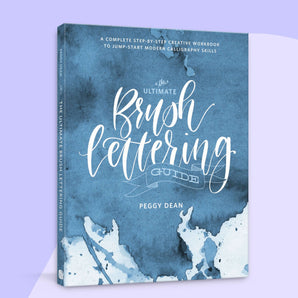
That’s why I made this guide for you. It’s just a way to start noticing what’s already showing up in your work so you can build from that instead of guessing.
While that's fun and cute, I want to talk about where this actually gets messy, because this part is easy to agree with and a lot harder to trust when you’re in the middle of it.

Why finding an art style feels so hard
It’s easy to agree with the idea that you don’t need a niche. It feels freeing for about five minutes. And then you sit down to make something and your brain goes: “cool… so… what now?”
Because without a clear lane, it can feel like everything is an option. And somehow that makes it harder to start, not easier. This is usually where people assume they’re doing something wrong or don't have good ideas. Like they’re too scattered, or not disciplined enough, or just not “consistent” in the way they think they’re supposed to be. But what’s actually happening is a lot simpler.
What the creative process really looks like (it's messy)
You’re simply in the middle of something that hasn’t revealed itself yet.
And that middle part? It’s not linear. It sure doesn't look cohesive. And it most certainly doesn’t give you a neat answer you can point to and say, “this is my style.”
It looks like:
- trying things
- abandoning things
- circling back
- repeating yourself without realizing it
- It looks like a mess.
And as much as it may feel like it is, it’s not random. There are patterns in there. They’re just quieter than we expect them to be. If you slow down enough to notice them, instead of trying to force a direction, that’s when things start to feel more… grounded. Less like guessing, more like following something that’s already there.
How to find your art style without forcing it
Now, I want to show you what this actually looks like because otherwise it can stay a little abstract. Let’s say you’re making all kinds of different things. One day it’s loose florals, another day it’s lettering, then maybe something more graphic, then something totally random that doesn’t match anything else.

From the outside, it can feel like there’s no consistency at all. But if you zoom out just a little, you might start to notice things like:
- you always come back to certain shapes
- your color palettes tend to live in the same mood
- your lines have a similar kind of movement (even when the subject changes)
- or you keep exploring the same feeling, just in different ways
That’s the thread.
Not the subject. Not the category. Not the “niche.”
It’s the way you see and interpret things.
And once you start noticing that, you don’t have to force yourself into a lane anymore. You can let your work expand while still feeling like it belongs together.
This is also why I care so much about building awareness before structure.
Because if you skip that part, any “style” you try to lock into ends up feeling a little borrowed or a little forced. Or like something you have to keep up with instead of something that actually fits.
For when you want creative support...
And if you’re realizing you don’t want to figure this out alone, that’s exactly why The Art Nest Community exists. It’s a space where we explore this kind of thing in real time, with prompts, conversations, and actual making, instead of trying to solve it in your head.

No pressure on that at all. Just something to know exists if you want that kind of support. I hope to see you inside 💛